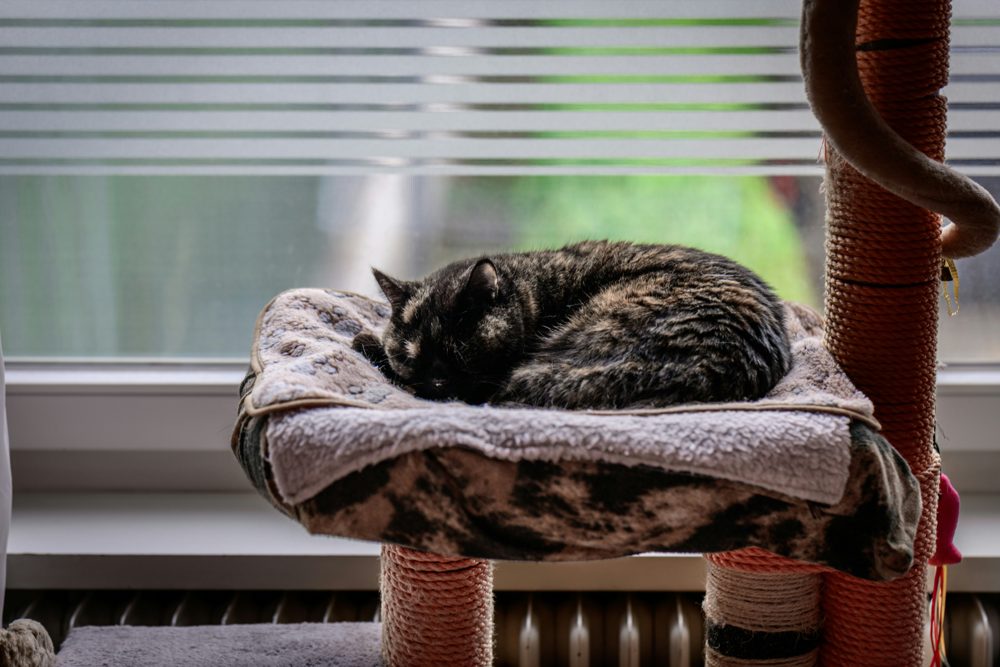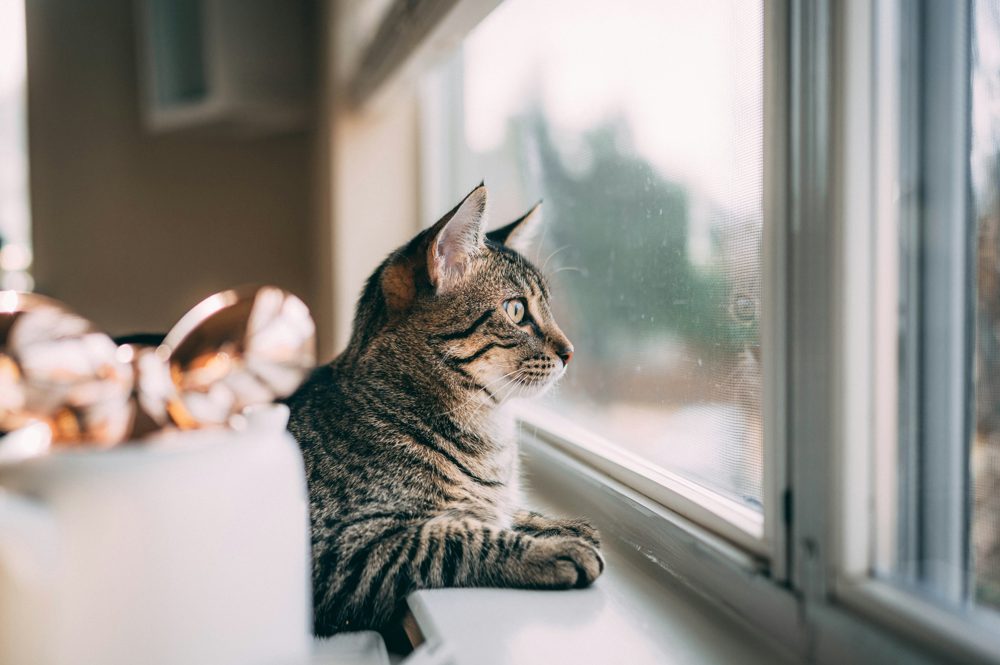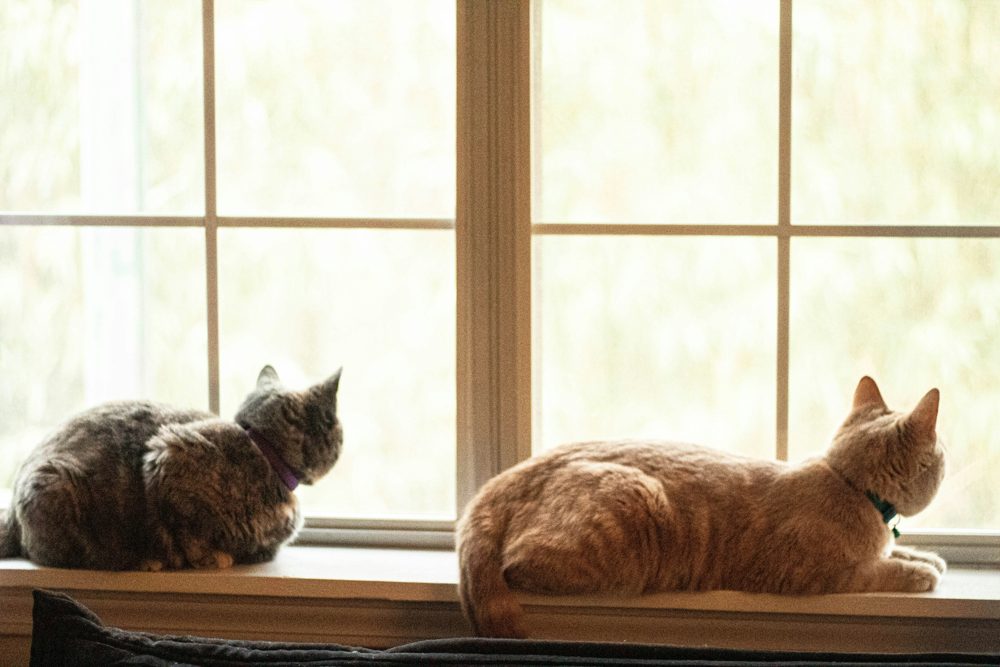
Cats feel safer and more relaxed when they can observe the room from above. A cat tree or a window perch gives them a lookout, a place to rest and room to climb. This guide covers what to look for and where to put them.
Choosing a cat tree
- Stability: the base should be wide and heavy, and the tree should not wobble when your cat jumps. Tall trees may need a wall strap.
- Size: larger or older cats need wider platforms and sturdy posts. Check the weight limits.
- Levels: a few levels at different heights suit most cats. Several cats may need more than one resting spot.
- Materials: sisal posts for scratching, and plush surfaces for lounging.
- Cleaning: removable cushions are easier to wash.
Think about your cat
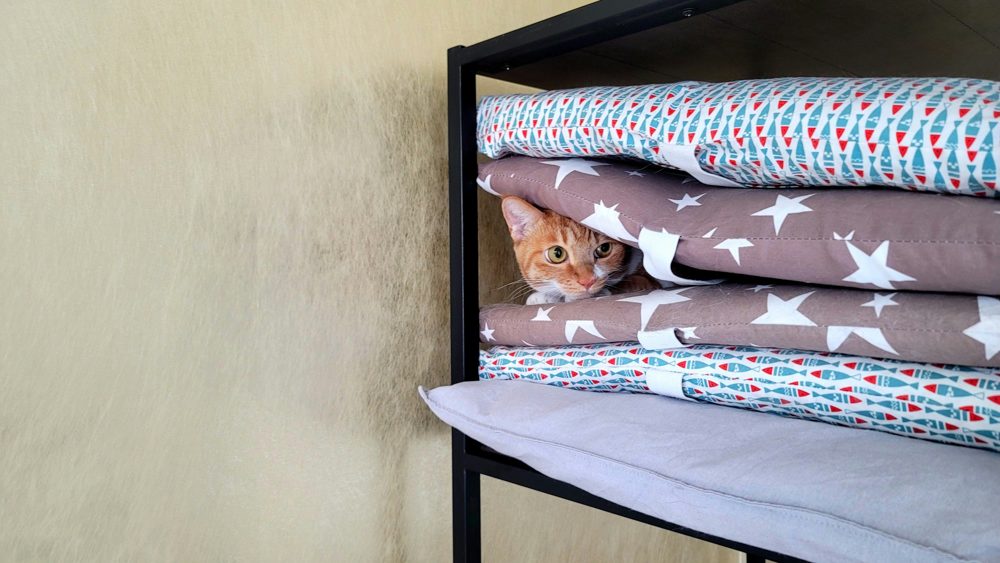
Young, active cats like tall trees with many platforms. Senior cats may find high jumps difficult, so choose a lower tree with ramps or steps. A shy cat might want a hideaway, such as a covered box, while a social one prefers an open platform.
Window perches
A perch that attaches to the window frame or the sill offers a view of birds and passers-by. Check how it is fixed, the weight it can bear and the width of your sill. Suction cup models need a clean, smooth window and should be rechecked from time to time.
Wall shelves
Wall-mounted shelves use vertical space in a small room. Fix them securely into studs and test the load before use.
Placement
Put the tree near a window or in a room where the family spends time. Cats like to be with people but still want a place to retreat to.
Safety
Keep blind cords out of reach, and do not place a perch where your cat could fall onto a hard surface from a great height. Check fixings regularly.