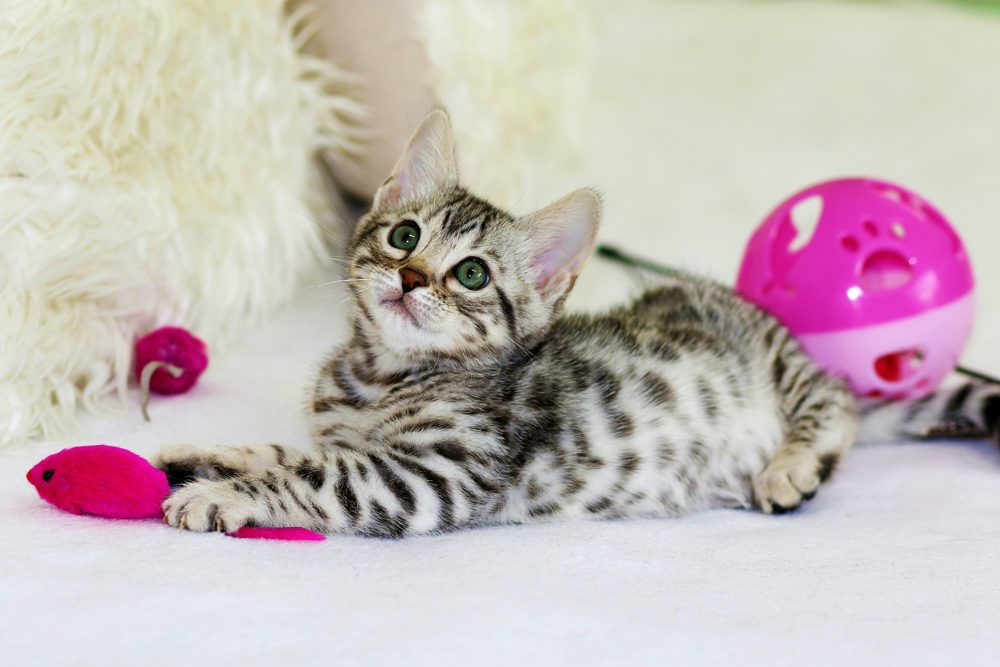
Indoor cats need places to climb, chase and pounce. A good mix of toys, rotated often, keeps playtime fresh. This guide covers the types of toys that work and some simple habits that make them more fun, for you and your cat.
Wand and teaser toys
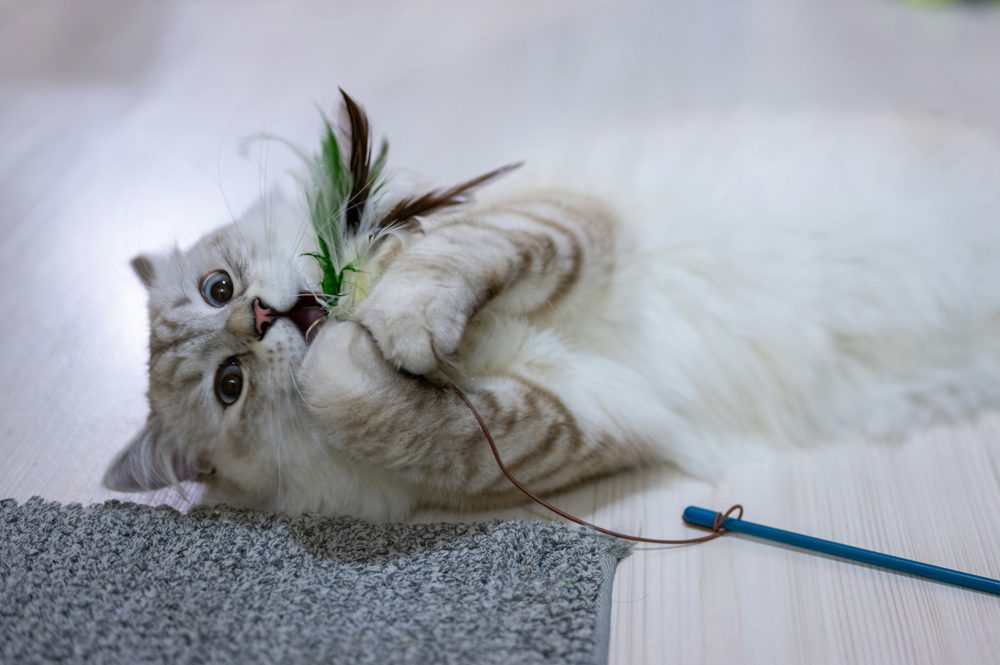
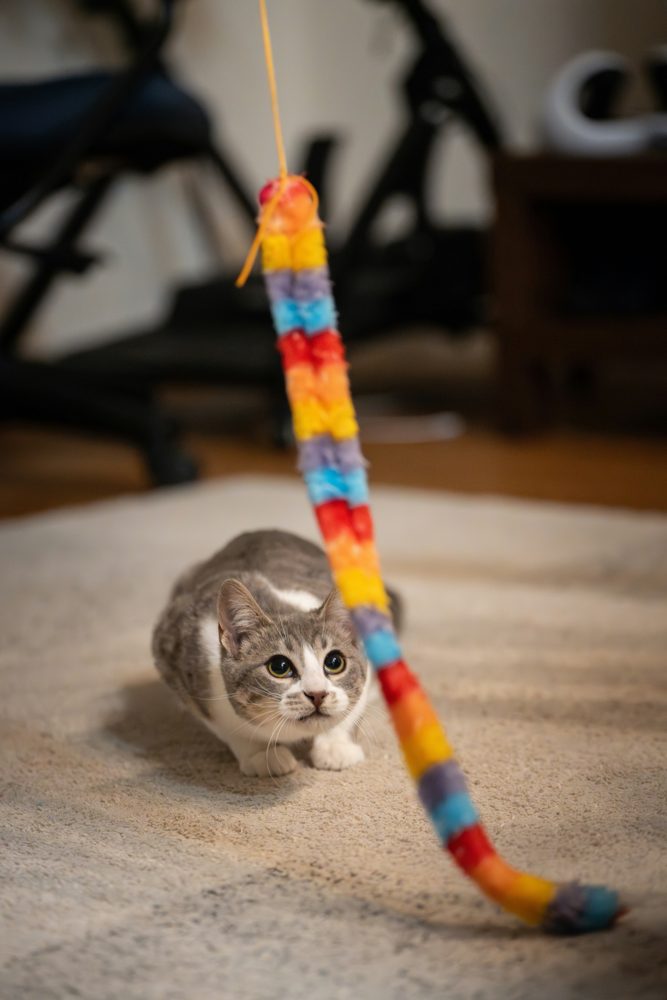
A feather or ribbon on a wand lets you mimic prey. Move it like a bird or a mouse, with pauses and sudden darts, and let your cat catch it at the end so the game feels rewarding. Put wands away after play, because string and feathers are unsafe if swallowed.
Tunnels and hiding spots
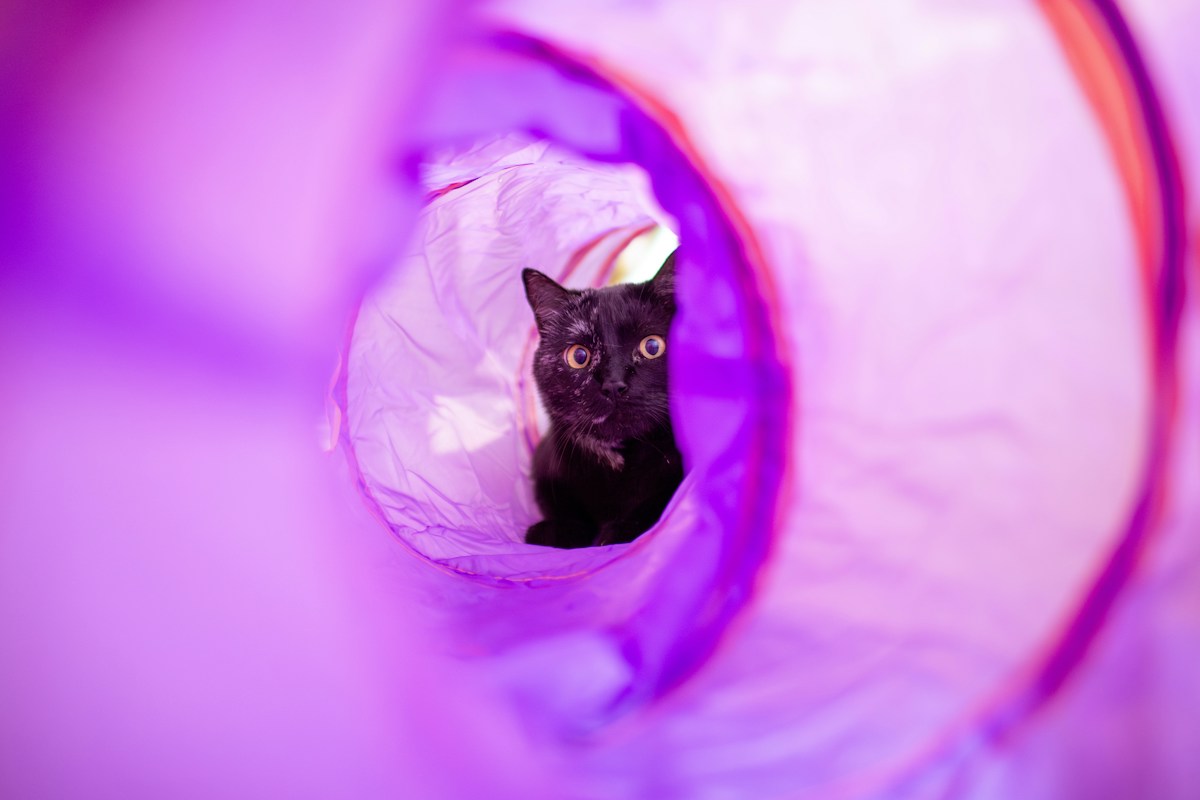
A crinkly tunnel offers hiding, ambush and chasing in one. Many cats enjoy a cardboard box just as much. Place a tunnel near a wall or a piece of furniture so your cat can dart in and out.
Climbing and vertical space
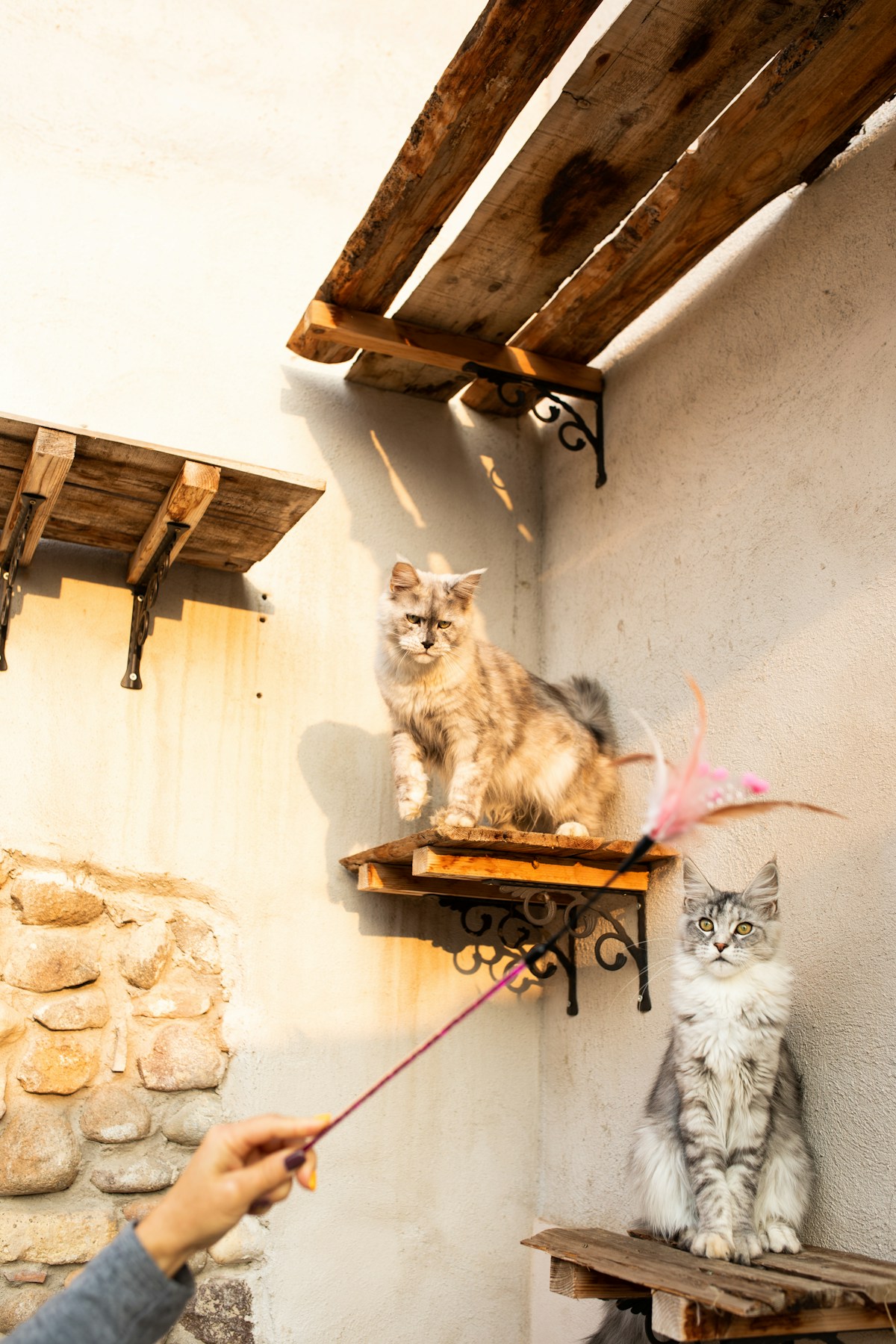
Cats like to survey a room from above. Wall-mounted shelves, perches and cat trees give them height. Make sure anything you mount is fixed securely and can bear the weight of your cat.
Catnip toys
Many cats respond to catnip, though not all of them do. Offer it in small amounts and in a toy or on a scratching post. If your cat ignores it, silvervine and valerian toys are alternatives that some cats prefer.
Solo play
Balls, crinkle toys and small mice let a cat play alone. Choose toys that are too large to swallow and have no loose parts. Puzzle feeders turn mealtime into play.
Rotate toys
Keep a few toys out and put the rest away. Swap them every week or so and your cat will treat them as new.
Play on a schedule
Short sessions of 10 to 15 minutes, once or twice a day, suit many cats. Playing before a meal fits the natural pattern of hunt, catch and eat.
Safety
Check toys for wear and replace them when they fall apart. Avoid string, wool and small parts your cat could swallow.